

Booking Engine / Channel Manager

Multi-hotel and carousel search engine of nearby hotels, essential to increase direct sales in hotel chains

Multi-hotel and carousel search engine of nearby hotels, essential to increase direct sales in hotel chains
José María Ramón Cardona

José María Ramón Cardona

21 Feb 2023

Reading Time: 4 minutes

The digital experience is based on the primary human responses to the variety, the price and the speed, which must be attended by implementing that technology that makes it possible. It is here when the need for hotel chains to have a multi-hotel booking search engine and a carousel of hotels nearby. but most, suspend in user experience.
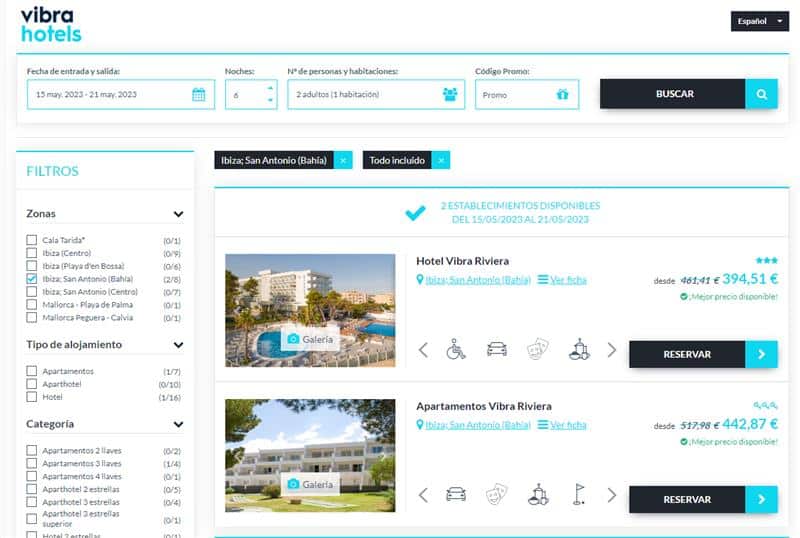
When it comes to booking a hotel room or any other type of associated services online, there are three preferences that take the lead in consumers' minds.

The first is to have variety and multiple options available. Guest preferences have changed steadily over the past three years, creating challenges for hotels seeking to bring new levels of customization to what travelers expect in this new technologically dominant era.

The second is to have a wide price comparison. This approach transcends geographic locations: the consumer always wants to compare prices to obtain the best possible offer, something that prevails with respect to OTAs and should be enhanced in the direct channels of the chains, offering options cross-wise.

And the third, is to have an excellent navigation experience (UX), which should successfully incorporate the first two preferences (options and prices), fluently and agilely.

In short, the digital experience is based on primary human responses to variety, price and speed, which must be attended by implementing that technology that makes it possible. It is here when the need for hotel chains to have a multi-hotel booking search engine and a carousel of hotels nearby. But most, suspend in user experience.


An enriched search, endless opportunities 

Most chains forces the potential guest to select a specific hotel, without even knowing it beforehand or offering opportunities beyond a primary location. This directly affects the direct reservation, since it creates biased information, which impoverishes access to the total potential of hotel offer that the chain in question has. A frustration that, as we amply know, will expel the client, quickly directing him to external search engines, where he can do specific searches, extra information, and illustrative images.

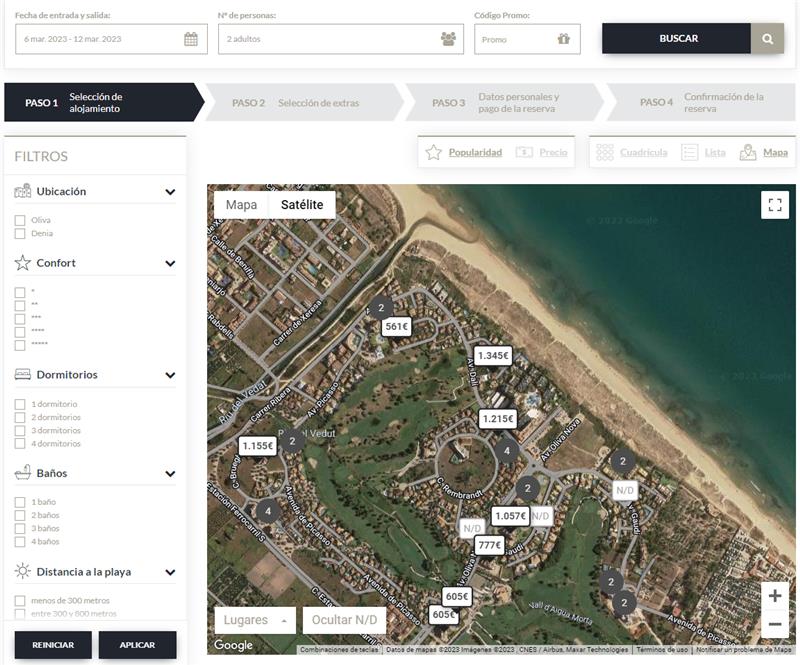
In the case of having an engine with a multi-site search engine, the information stops being biased, being able to offer all the potential in the same place. In this way, visitors can compare and reserve based on interests that combine transversally the entire hotel offer of the chain, and creating a unique itinerary directly from the website, without abandoning the tour.

The search for hotels and multiple zones allows the chain to show its rates live, along with the availability and specific characteristics of all its locations, such as price, services, type of pension, rooms adapted for reduced mobility, parking, swimming pool, etc., as well as the possibility of obtaining promotional codes that apply to all hotels, in a single navigation point.
Customization is: Flexibility + Choice

Travelers have shown a continuous opening to book directly with hotels in 2022, even though the OTAs regained ground. Globally, a hotel's website was more important as a source of income in 2022 than it was in 2019.

Although the average daily rate of rooms has increased by 24%, the momentum of reserves remained solid, with reserve volumes increasing to 104% of 2019 levels globally by December 31, 2022. (SiteMinder)

These numbers are the clear indicator that direct reservations are increasing and that there is no better time than the current one, to apply a strategy that connects the best technology with the most extensive user experience.

By offering more varied options, hotels can make the sale of their services much richer. Satisfying the needs of the current customer will then take the form of purchases based on attributes (sale of individual elements of a room or hotel experience during the reservation) in small doses.

The attributes of each hotel room, added to the specific characteristics outside of it, allow true customization, giving more control to the acquisition experience, by users.


The power of a carousel from nearby hotels 

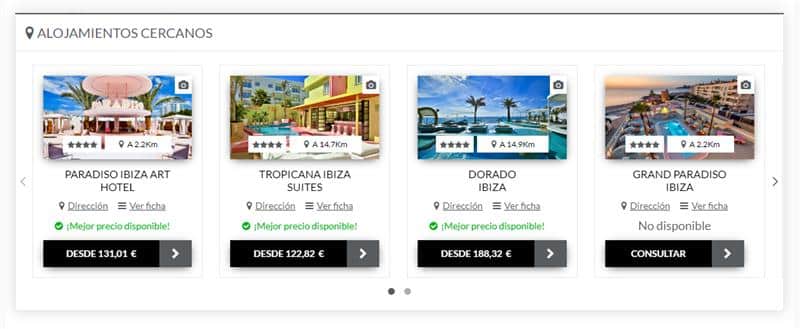
An infallible strategy of OTAs is to offer alternative hotels, why not show other hotels nearby your own hotel group then? It is a clear advantage that you compare between hotels in our chain in a similar location, to lose you with an external option.

If your hotel chain spreads across the country, this can make it difficult to attract different types of guests. With the help of a multi-property booking engine, guests can easily be reached without any location barriers, offering in real time other options at a national or international level, based on the client's interests.

By offering a search that does not leave aside any possibility within the hotel offer of the chain, the possibilities of losing a sale are minimized, while boosting the value of each hotel within the group, activating the discovery of other properties, not initially considered by the user.

Vista de selección de hoteles cercanos
Selection view of nearby hotels

In conclusion

In this complex and unpredictable economic environment, with accelerated digital adoption and the persistent effects of the pandemic, hotel chains must devise the right strategy to drive direct bookings, reduce overall distribution costs, and increase repeat visits.

With a multiple of properties, this has extra possibilities for hotel chains, which have an extensive offer to make available to their guests. Opting for timeshare digital solutions is mandatory when it comes to maximizing performance.