



Reading time: 3 minutes
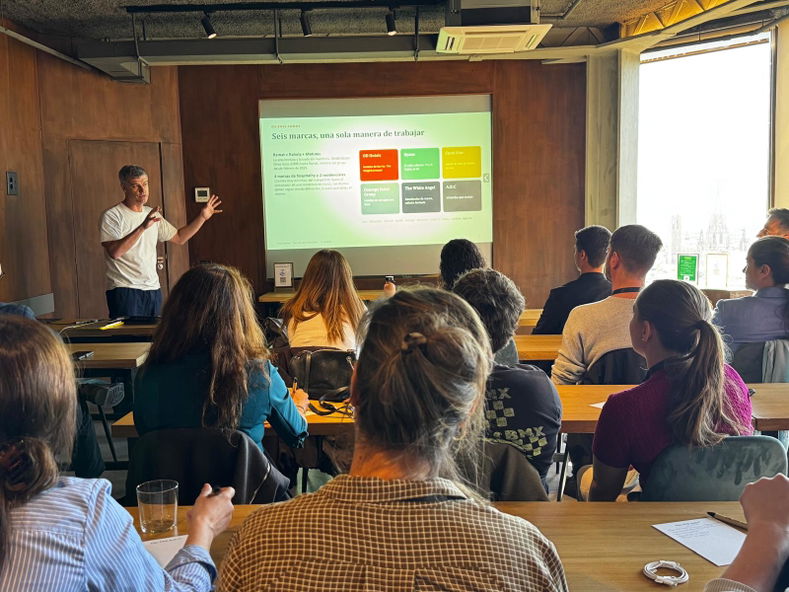
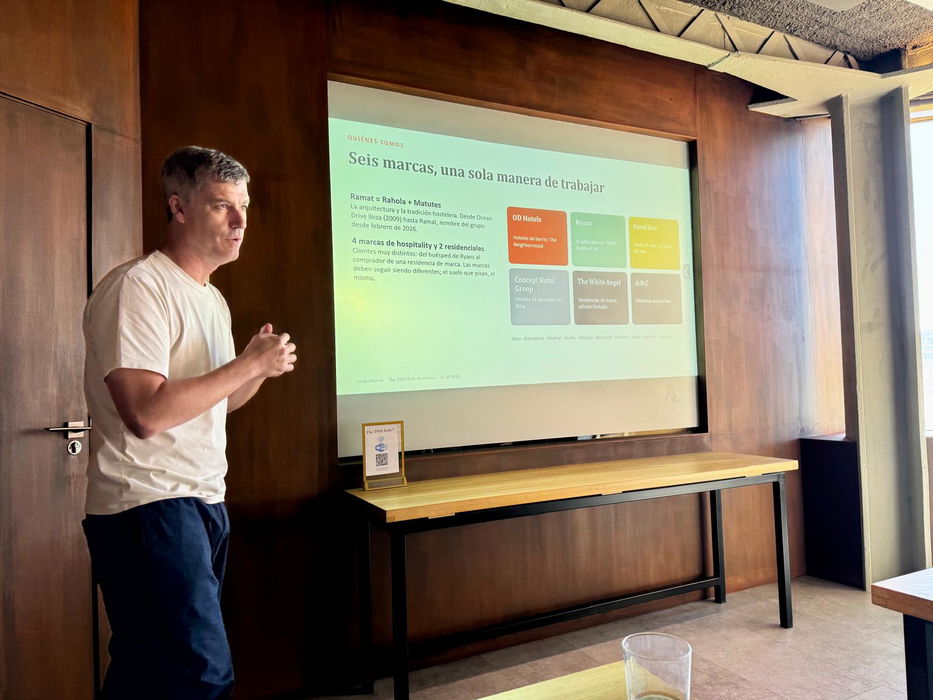
Marc Rahola Matutes, founder and CEO of Grupo Ramat, told us at our private event, neoLabs Barcelona, how his hotel group replaced email with documented processes. It now has more than 7,000 of them, and 242 AI agents work on top of them.
How they eliminated email and turned every task into a process AI can read
Marc Rahola began the interview by talking about one of those emails sent to 25 people with a “hello everyone,” which ends up buried under the ones that follow and which, three months later, forces everyone to repeat the same meeting to explain what was already written down. Nobody was to blame, and yet the company was losing information and time every week.
Rahola admitted that he came to artificial intelligence almost by accident. Two years ago, what he was looking for was a way to end repeated meetings and emails nobody read.
The decision was to replace email, the WhatsApp group and the hallway conversation with a process management platform. Every task is recorded with its owner, its stages and its outcome. The first year, he said, was dramatic. Part of the team saw it as extra work, with some people logging tasks and others not.
They started with digital marketing, the area with the most problems, and extended it from there to the rest of the departments. Today even a hotel manager’s supply orders go through the system.
Thanks to this, the group can see how many good-night cards each hotel has bought during the year, when, and at what occupancy, without anyone having to spend hours building a spreadsheet.
Rahola calls this “own data.”
Market data is available to anyone willing to pay for it. How a company combines its processes, what failed in the last project and what was adjusted in the next one belongs only to that company. With more than 7,000 processes recorded and connected to AI models through MCP (Model Context Protocol), that history already feeds 242 agents.
Marc explained it with a very clear example: the hotels of Grupo Ramat often organize their own events, many of them with DJs. Before, a single session generated a cascade of instructions for management, social media, the website’s event calendar and the virtual queues connected to the CRM. Now the DJ who has been booked fills in a briefing, and that briefing generates the schedule and the instructions for each team. The events manager only validates. Since everything is recorded and cross-referenced with point-of-sale data, the group knows which DJ generates the most revenue and at what time.
The dashboard used by the finance department projects cash flow, investments and refinancing several years ahead based on the group’s actual historical average, which corrects each department’s most optimistic forecasts. He built that system in a single morning. That said, the foundation that makes it possible had been under construction for two years.
Why AI fails if the team’s roles don’t change
If the organization works badly, AI multiplies that malfunction. Rahola said he knows groups with impeccable data infrastructure where nothing changes because they still have the same meetings, the same bosses and roles designed for the previous system.
At Grupo Ramat, they split the operations management into two roles. One focuses solely on the day-to-day running of the hotels. The other handles what does not exist yet, new projects and processes under review, and the two meet to see what is failing on each side. They also created a data and AI committee with people from every department, and a team of three who train the rest of the staff every Friday.
To explain why everyone has to take part, he used an image. Before, each department had its own bucket of water. Now everyone pours into the same lake, and it only takes one department to pollute its share for the water to stop being useful to the rest.
He insisted that age has nothing to do with it. One of the key people in day-to-day operations is 60 years old and contributes the most knowledge, now with tools they did not have before.
At first, the social media manager asked him whether the system was meant to keep an eye on them. Marc explained that it was there to serve her. With the processes recorded, she would see how each campaign performed, and if she disagreed with one of his decisions, she could challenge it with data from earlier campaigns.
How Ramat protects its direct sales now that guests can book from ChatGPT and Claude
An important share of the group’s direct sales comes through its website. Some of its hotels already sell 40% direct, and that website has been fed for years by its Google rankings.
A year and a half ago, Rahola asked his team what would happen if that changed. If, in three years, searches were split evenly between Google, AI-powered search engines and assistants such as ChatGPT or Claude, and the group kept working only on SEO, it risked losing two thirds of its direct sales.
On Google, it was enough for the hotel to explain itself well. An AI assistant builds its answer also from what other sources say about the hotel, and if the versions don’t match, the answer comes out inconsistent. That is why they organized each brand’s information in three layers: the group’s, each hotel’s and that of the neighborhood where it sits, because a neighborhood hotel in Barcelona does not tell the same story as one in Seville.
According to him, they can already identify bookings coming from ChatGPT and Claude, and that has finally convinced the people on the team who saw the whole AI topic as a fad.
A shared vision
This new business strategy brings Grupo Ramat closer to our way of building technology and to the development of new artificial intelligence solutions for the hospitality sector.
As a Neobookings client, Ramat has shared with our team how it is using both MCP and its AI agents to connect processes and automate operations. The next step will be to explore together how to integrate these capabilities with Neobookings’ data and systems, from the booking engine and the CRM to guest behavior, in order to develop end-to-end solutions that let its hotels make better decisions, automate tasks and increase their direct sales.
Four steps to get started at your hotel
Ramat’s experience yields a sequence that does not depend on the size of the group. Start with the area where the same emails repeat the most. Turn one specific channel, such as supply orders, into a process with an owner. Bring together the people who care about these topics, whichever department they come from, and give them time to train everyone else. And accept that the first year is going to hurt.
What Marc described is something we see every day in the direct sales of the hotels we work with. When marketing, reservations and payments each work with their own information, the booking gets lost in the gap between them. The technology reaches everyone equally. The data each hotel generates about its own operation is the only thing that cannot be copied.
* Grupo Ramat brings together six brands, four in hospitality (OD Hotels, Ryans, Coral Star and Concept Hotel Group) and two residential (The White Angel and A:B:C), with a presence in cities such as Ibiza, Barcelona, Madrid, Seville, Málaga and Porto.